
Zicartola: alvorada do samba
Director:
Joao Inada e Emílio Domingos
Producer:
Ana Bovino
Production company:
Sete Léguas Filmes
Production country:
Brasil
Duration in minutes:
110
Contact:
Sinopsys:
Brazilian rapper Marcelo D2 roams Rio de Janeiro searching for traces of a mythical samba house erased by time. But as the past resists reconstruction, he engages with a history that cannot be fully recovered.
Long Sinopsys
“Zicartola: Dawn of Samba” investigates how cultural memory survives when its physical traces have disappeared. At its center is the legendary Zicartola, a short-lived samba house opened in Rio de Janeiro in the early 60s, a space where artists, poets, and revolutionaries from all corners of Brazil converged, created, and dreamed a different version of Brazil. One that embraced Black Culture and its ancestry. Tragically, the restaurant lasted only over a year.
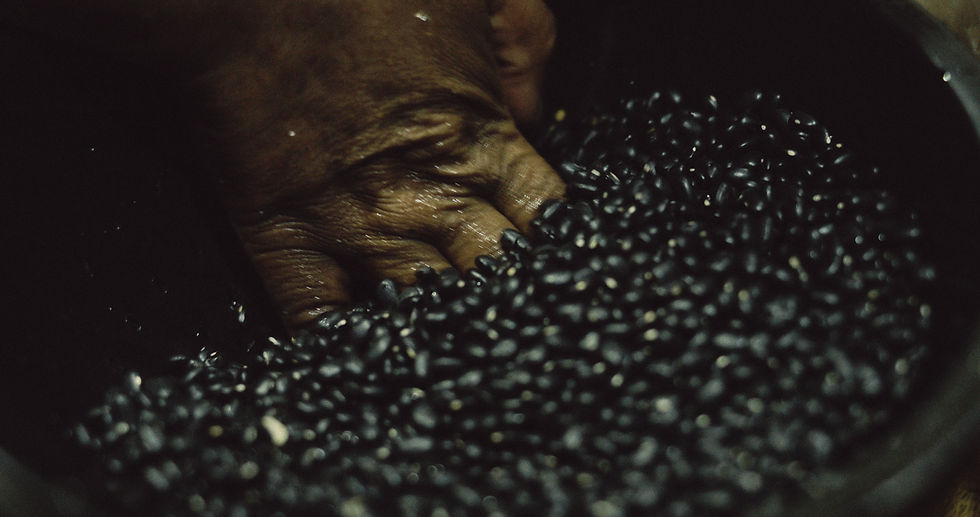
Zicartola was envisioned by Dona Zica and Cartola, the most iconic samba couple that ever lived. Cartola, founder of Estação Primeira da Mangueira, was a musical genius whose life was marked by repeated erasure. And Dona Zica, his life companion, created a sanctuary through cooking, care, and persistence, where daily practice became ritual, and ritual became culture.
Today, the building stands empty, and visual records of its existence are scarce. Faced with this absence, the film does not attempt a traditional historical reconstruction. Instead, it follows D2 through graveyards, samba houses, and studios, as his search for Zicartola and its missing fragments becomes a contemporary act of reactivation. Moving through rehearsals, recordings, shared meals, interactions, and jams with musicians and cultural bearers connected directly or (indirectly) to Zicartola’s legacy, D2 engages with fragments that resist being assembled into a complete past.
Together, they rework songs associated with the space, creating new arrangements that lead toward a live performance. Each chapter of this film, or as we labeld them: “record track”, functions as a narrative trigger, opening partial windows onto a history largely erased from official archives but carried forward through bodies, food, and music.
Guided by the thought of Abdias do Nascimento and the epistemology of the “Teatro Experimental do Negro,” (The Black Experimental Theater, in free translation), the film approaches reenactment as a political gesture: memory not as something preserved intact, but as a practice that only exists when performed, cooked, sung, and shared.
Dona Zica’s presence structures the film even in her absence. Her cooking, long overshadowed by the legendary figures who passed through Zicartola, emerges as a foundational act of care and resistance. Ultimately, the final live performance does not resolve the investigation; it marks a provisional gathering. Zicartola: Dawn of Samba argues that cultural legacy is never fixed. It survives through fragile, collective practices, continually reactivated in the face of disappearance.

Creative Process
O filme é concebido como um ensaio sonoro, no qual a música estrutura tanto a narrativa quanto a imagem. Cada canção ensaiada por Marcelo D2 funciona como um fragmento em um mosaico caleidoscópico — conscientemente incompleto — que articula memórias, gestos, receitas e encontros em um álbum vivo, mais do que em uma reconstrução. A linguagem visual acolhe lacunas, repetições e ausências: o uso escasso de material de arquivo não é casual, mas consequência do apagamento histórico da cultura afro-brasileira, que privilegiou a transmissão em detrimento do registro. Ensaios, corpos, espaços e texturas do presente sustentam aquilo que as imagens não conseguem fixar. Nesse jogo entre som e imagem, o filme se aproxima da memória como um ato de reconexão — religare — no qual a reconciliação não se dá pela restauração do passado, mas por sua reativação no presente.
Director's note
When I first heard about Zicartola, I was at a bar talking to a random guy so drunk he was incapable of telling lies. Despite his extreme state of inebriation, he described, in precise detail, a place that seemed impossible. A samba joint. But not just any samba joint. The original one. The first samba house in Brazil. It stood on the second floor of a decadent colonial townhouse in downtown Rio de Janeiro, just a few blocks from where we were.
Inside, artists, thinkers, musicians, poets, composers, and revolutionaries sang their lungs out to forgotten sambas. All social classes mixed together as if inside a matchbox, a real aleph filled with smoke and booze — a crossroads of culture and politics where all of Brazil drank, sang, and belonged. And the taste of the food, oh lord. That he couldn’t describe. There were no words. And he was too drunk.
He was describing Zicartola. A restaurant at Rua da Carioca, number 53, far from Mangueira — the true home of Dona Zica and Cartola, the couple who created it and helped redefine samba forever. Their music and their flavor were unmatched.
Who could imagine that samba’s most iconic couple would open a restaurant in the city center after almost a decade of invisibility? And on the eve of a military dictatorship? Filling it with old-guard composers and young revolutionary idealists?
Cartola and Dona Zica did exactly that. A Black couple with nothing but drive, grit, and vision opened what was, at the time, the most incredible music-and-food joint on the planet. It was their love and determination that helped save samba. This film is made in their memory — a memory erased, but not its echoes, ancestry, and flavor.
It was midsummer, 1964. The air inside Zicartola was hot, humid, thick with smoke. In the corner of a dining hall covered with artist portraits sat the “Divine” Cartola, cigarette in one hand, cachaça in the other. Samba’s most legendary composer, founder of Mangueira, repeatedly forgotten by history yet still there, voice emerging beneath a corroded nose lit by each drag of his cigarette.
Around him gathered Tom Jobim, Vinicius de Moraes, Dorival Caymmi, João Gilberto, and Aracy de Almeida, singing while devouring Dona Zica’s delicacies: pastel de feijão, jiló ao alho, mocotó de tutano. Empty beer bottles formed a maze between plates of leftover soul food and overflowing ashtrays.
In the middle of the circle sat Nelson Cavaquinho, cradling a guitar, playing one of his saddest songs, Juízo Final, with a voice shattered by smoke, booze, and hardship.
At another table, Nara Leão, Zé Keti, Ferreira Gullar, and Carlos Lyra planted the seeds of Opinião, a revolutionary show about resistance, race, and identity. Nearby, young musicians like Elton Medeiros, Aldir Blanc, and Paulo César Batista — later known as Paulinho da Viola — joined the samba circle.
Then Clementina de Jesus stormed through the door chanting an ancestral song a cappella. The portraits seemed to vibrate with her voice. With her came painter Heitor dos Prazeres, producer Hermínio Bello de Carvalho, and journalist Sérgio Cabral. At the far end of the hall, poets Manuel Bandeira and Carlos Drummond de Andrade lay drunk across a table.
This was one night. One among many at Zicartola, showcasing the best of our culture: music, food, resistance, and love. And it is gone.
No recordings were ever made of the performances that took place there. Only a handful of photographs remain. What survives is oral history. Most witnesses are gone. All but one — and thank the gods for his existence: Paulinho da Viola.
The absence of video or sound recordings from Zicartola is no coincidence. It reflects a structural pattern of Black historical erasure that remains active today. Our motivation emerges precisely from this absence. Yet this erasure also carries a counter-method articulated by Abdias do Nascimento through the Teatro Experimental do Negro.
The thesis is simple and radical: if Black history has been denied the right to be archived, then the past must be created again, now.
When we understood that the lack of memory was not a limitation but the driving force of this film, our possibilities expanded. It led us to conceive “Zicartola – Dawn of Samba” as an act of reactivation — bringing the past into the present despite the enormous efforts made to keep it forgotten.
Director
Joao Inada e Emílio Domingos
João Inada and Emílio Domingos are Brazilian filmmakers whose practices intersect documentary cinema, music, and cultural memory, with a shared focus on Black histories, performance, and lived transmission beyond official archives. João Inada is a filmmaker working across documentary, immersive media, and research-driven nonfiction. His work investigates memory, territory, and cultural resistance through long-term engagement and hybrid narrative forms. He won the Grand Jury Prize at the World VR Forum (Switzerland) with Reframe Iran (2016) and directed Under the Skin (2020), an immersive documentary set in Rio de Janeiro’s Complexo do Alemão, which premiered at IDFA and was selected for SXSW. Inada co-founded the Festival Imersivo das Favelas (FIF) and has worked as a researcher at the Brown Institute for Media Innovation. He is currently directing the feature documentary Zicartola – Alvorada do Samba. Emílio Domingos is a filmmaker, anthropologist, screenwriter, and producer, and a member of the Academy of Motion Picture Arts and Sciences (AMPAS). He holds a Master’s degree in Culture and Territorialities (UFF) and teaches at PUC-Rio and FGV. Domingos has directed acclaimed feature documentaries including A Batalha do Passinho, Favela é Moda (Audience Award, Festival do Rio), Black Rio! Black Power!, and Chic Show. In 2025, he released multiple music-driven documentaries, including Os Afrosambas: O Brasil de Baden e Vinícius (HBO Max) and Baila Vini (Netflix). Together, Inada and Domingos bring complementary approaches—research-based investigation and deep musical-cultural immersion—to Zicartola – Alvorada do Samba, a feature documentary that treats memory as a living practice activated through music, food, and collective presence.

Director
Emilio Domingos
Emílio Domingos is a filmmaker whose work moves between cinema, anthropology, music, and Black cultural history. Trained in Social Sciences at UFRJ, with a specialization in Visual Anthropology, Urban Culture, and Youth, and holding an MA in Culture and Territorialities from UFF, his films are grounded in long-term research and an ethnographic attention to bodies, rhythms, and collective memory. A member of the Academy of Motion Picture Arts and Sciences (AMPAS), Domingos also teaches Media Studies at PUC-Rio and Documentary Research and Screenwriting at FGV. His recent features—Black Rio! Black Power! and Chic Show (2023), and Os Afrosambas: The Brazil of Baden and Vinícius (2024)—form a loose constellation around music as a site of resistance, sociability, and Black self-invention. Earlier award-winning works such as A Batalha do Passinho, Deixa na Régua, Favela é Moda, and L.A.P.A. established his signature approach: films that treat popular culture not as folklore, but as living political thought. Across film, television, and streaming platforms, Domingos’ practice consistently reframes Brazilian culture from the inside, privileging lived experience, oral history, and collective authorship over spectacle.
