Intrecci Invisibili
Director:
Giulia C. Borges
Producer:
Federico Fasulo
Production company:
Eclettica
Production country:
Italia
Duration in minutes:
60
Contact:
Sinopsys:
To process family trauma through the staging, in a theatre, of memories, rituals, and magic. The film arises from the desire to untangle the invisible threads within the Brazilian side of my family and to investigate the origin of a curse passed down along the female line. Structured in acts, the film brings together actors and real figures from Brazilian cults who reenact on stage, together with my mother Andrea, traumatic episodes and historical moments within an immersive virtual theater space. Following an invisible trace made of interviews, stories, and photographs, I delve into my family’s past until I encounter the erased figure of my great-great-grandmother: an Indigenous girl enslaved and given in marriage at a young age to my Portuguese great-great-grandfather, owner of a sugar plantation, and later forgotten. In the film, this presence returns in the form of a ghost.
Long Sinopsys
I wander through the silent corridors of a theater until I reach my mother’s dressing room. I open the door: she is alone, touching up her makeup with a fragile elegance, as if she were unknowingly wearing her own past. When she notices the camera, she smiles awkwardly. In the virtual production theater, the LED screens turn on by themselves, projecting old handycam footage fragmented, slowed, distorted. The place is empty yet hypnotic. My voice-over recalls the beginning of a personal investigation born from a shared fear among the women of my family, as if a curse could repeat itself.
In the archival material, I appear too, filming and listening. I revisit an interview with my aunt Isabella in my grandmother’s garden in Brazil. Between glasses of water and wine, she talks about the “invisible threads” binding our lineage and the day she was abused during a Candomblé ceremony. She says she faced the monster and survived.
The LED wall goes dark: NO SIGNAL. Brazilian landscapes appear, houses, dusty roads. My video diary continues as I travel with a small crew near an old fazenda. Guided by photos my parents took in ‘91, I reconstruct places where my great-great-grandmother lived, gave birth, perhaps died. I film lights being assembled, actors in makeup, scenes prepared for the LED wall.In the sugarcane fields, a young girl appears, playing hide-and-seek. Maybe African, Indigenous, Arab. She whispers she is my ancestor. Her memories are fragmented: she doesn’t know if she had seven or eight children, was called “wild” for sleeping on the ground, liked being Christian. Suddenly she freezes and vanishes into the cane. A harsh light breaks the spell.
Back in the theater, my mother and her sister step onstage, recalling childhood rituals baths, trances, sacrifices. Actors reenact these memories while real Candomblé footage fills the LED wall. An elder enters, becomes a demonic figure, and announces a family curse. My mother asks what she must do; he cannot intervene.
The theater shifts into a Brazilian Protestant church. The elder becomes a pastor; a deliverance ritual unfolds. My mother burns photographs in an act of purification. Later, she recognizes the girl in the cane: the great-great-grandmother. Onstage, now a house, familiar objects materialize. The ghost girl runs on the LED wall; a house burns with her inside. My mother watches in silence. Lying down, she hears a voice in Portuguese guiding her. A soft light touches her face. A hand wakes her: my grandmother’s.
We are in her real garden. The women of the family gather. The ghost girl sits among them. My mother caresses her hair, she is no longer alone. The camera moves back, revealing the garden filled with the living and the departed. The girl’s serene face dissolves.
Only then do we see it: the garden is a projection on the LED wall. A memory that exists only in reconstruction. Reality cannot hold all this. Only cinema can.

Creative Process
A little girl with long black hair appears among the sugarcane, in the midst of smoke. She looks at us. She says nothing. She has always been there. Perhaps she is a ghost. Perhaps a vision. Perhaps a part of me.
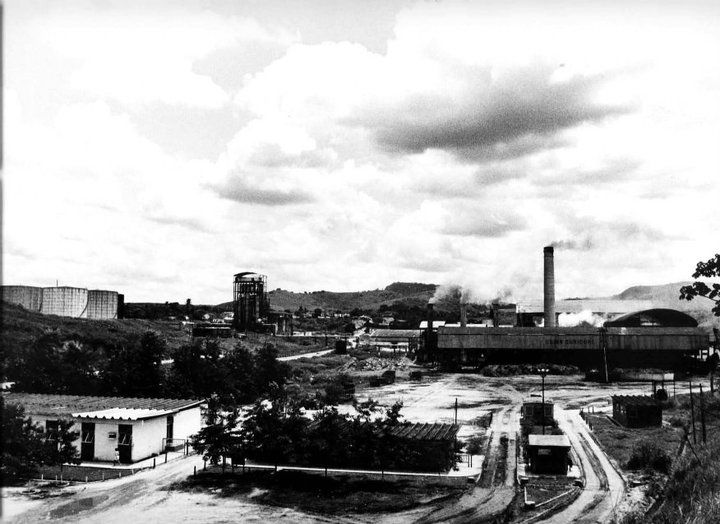
Invisible Threads originates from an image like this. An image that did not exist and that I had to construct, because no one had ever told it. A slave girl, perhaps indigenous, perhaps Arab, who lived in the early twentieth century on a fazenda in Northeast Brazil. A presence excluded from genealogy, from official memory, yet still alive in the bodies of the women in my family. She returns in the form of a vision, a ghost, a curse.
Invisible Threads is my way of evoking her. To understand whether the curse that has pursued the women in my family for generations can finally be broken, or at least clarified.
A hybrid, meta-cinematic documentary, blending personal diary, fiction, testimony, and ritual.
The film unfolds through three main expressive languages:
Virtual Production
Through a soundstage and an LED wall projecting real locations filmed in Brazil, I stage rituals, apparitions, and repressed family traumas. In this immersive, symbolic space, my mother will not fully know what will happen but will be guided by other characters and free to make choices. To observe her authentic reaction, I allow contact with these images to generate an emotional and mnemonic short-circuit. The LED wall is not just a technical tool but a symbolic portal: it evokes the invisible, gives shape to the unsaid. It makes possible what would be impossible in reality: such as the burning of a dollhouse containing the ghost girl, or the transformation of an elder into a demonic figure during a ritual. It is a space for evocation and connection with the unseen, a threshold between living and dead, past and present.
My mother, who inhabits the theater or real landscapes throughout the film, is ultimately projected on the screen within this spiritual, fictional, yet profoundly real dimension. I do not believe that the root of this deep family trauma (the curse) can be "resolved" in reality, but perhaps it can be reworked through the cinematic device.
Visual Diary
My voice-over and personal camera guide the viewer through the creative process: research, interviews, doubts, attempts. An intimate, self-aware narrative, halfway between documentary and mockumentary, where the “making-of” becomes an integral part of the story.
Contemplative Gaze
Images of Brazilian landscapes, the fazenda, sugarcane fields, roads, are filmed with a fixed, distant, almost sacred gaze. These places, filmed today, dialogue with photographs taken by my parents thirty years ago. This is where the root of the trauma lies, and it is here that, in the film’s finale, my mother symbolically reconnects with the other women in the family.

Director's note
Invisible Threads is conceived as my debut feature-length film, a deeply personal and experimental project. Thanks to its hybrid structure and development across multiple countries, the project naturally lends itself to an international co-production between Italy and Brazil.
The shoot will be structured in two main phases: one part will be carried out in Brazil, in locations connected to family memory, where I will gather documentary material and footage for the images to be projected on the LEDWall. The other part will be shot in a virtual production theatre, in Italy or another European country, making full use of the scenic and narrative potential offered by this immersive technology and by the theatre spaces themselves, such as dressing rooms, corridors, and other environments.
Particular attention will be dedicated to the post-production phase, which is crucial for the final outcome of the film: from editing to sound composition, to the creation of visual effects and their integration with the LEDWall.
Invisible Threads has completed the In Progress – MFN 2025 development lab and was presented in the Giornate degli Autori section of the 82nd Venice International Film Festival. This path allowed me to arrive at a solid first treatment of the project. My intention now is to continue developing the film, ideally in Brazil or in Portugal, the country of origin of my great-great-grandfather, places that are deeply connected to the narrative and symbolic material of the film.
The project relies on the production support of the Milan-based production company Eclettica, of which I am a member, particularly during the development phase and, potentially, in the organization of the shoot in Italy and in post-production. This would allow for cost containment while at the same time guaranteeing a high-level technical and creative realization. Currently, together with Eclettica, the project has been selected for EAVE Puentes 2025.
In this second development phase, which Doc Lab Coimbra could offer me, my goal is to further refine the writing and to engage in dialogue with authors and tutors who are in deep alignment with the themes I am exploring — in particular religious themes, the ethnographic approach, and the film’s modes of staging. Doc Lab Coimbra could put me in contact with figures capable of offering perspectives closer to the material of the project, helping me bring to light what is still unresolved.
Director
Giulia C. Borges
Giulia C. Borges is an Italian-Brazilian director, actress, and producer based in Milan. Her work moves between documentary and fiction, exploring identity, memory, and family trauma. She graduated in documentary directing from the Luchino Visconti Film School (2019) and the Michelangelo Antonioni Institute (2022). She directed the documentaries La nave Davidò and Dear Feature, and the short films Padre and Riflessi. Her new project, Teacher Andy, is a horror short awarded Best Pitch at Figari Film Fest and selected at ShortTS, ShortTO, Clermont-Ferrand, and Eli Roth’s Horror Section. She is also a partner at Studio Domu, London.
no password

Producer
Federico Fasulo
Federico Fasulo is a young writer, director and producer born in Milan. After graduating at the Met FilmSchool Berlin in 2016, he wrote and directed four short films: “Will There Be Enough Water?”, “Dorsia”, with which he won the Best Directing award at the tenth edition of the Asti film Festival, “Biccheri”, shot on 35mm, and “Zum See”, premiered at Alice nella Città. He is a co-founder of the production company Eclettica, for which he curates and produces several short films by emerging Milan-based filmmakers. These works have been successfully presented at major festivals worldwide, including Foto di Gruppo (by Tommaso Frangini, 2023), selected in competition at the 80th Venice International Film Festival – Critics’ Week, and a finalist for Best Short Film at the David di Donatello Awards. With Eclettica, in addition to film production, he also works as an executive producer on numerous advertising and music video projects, both nationally and internationally. He is the Artistic Director of Gorilla Distribution, an international short film distribution company that, in just over a year, has established itself as one of the most relevant European players in the short film festival circuit. He has worked along 2023 and 2024 in MIR Cinematografica as assistant producer and also works as freelance as 1st AD and line-producer on different independent short films, commercial productions and international projects. His inspiration has its roots in auteur cinema but is also accompanied by a deep fascination of the genres of horror, thriller and absurd comedies. His interest for art is coupled with the one for philosophy, which he studied at the Università degli Studi di Milano and the University of Oslo.
